
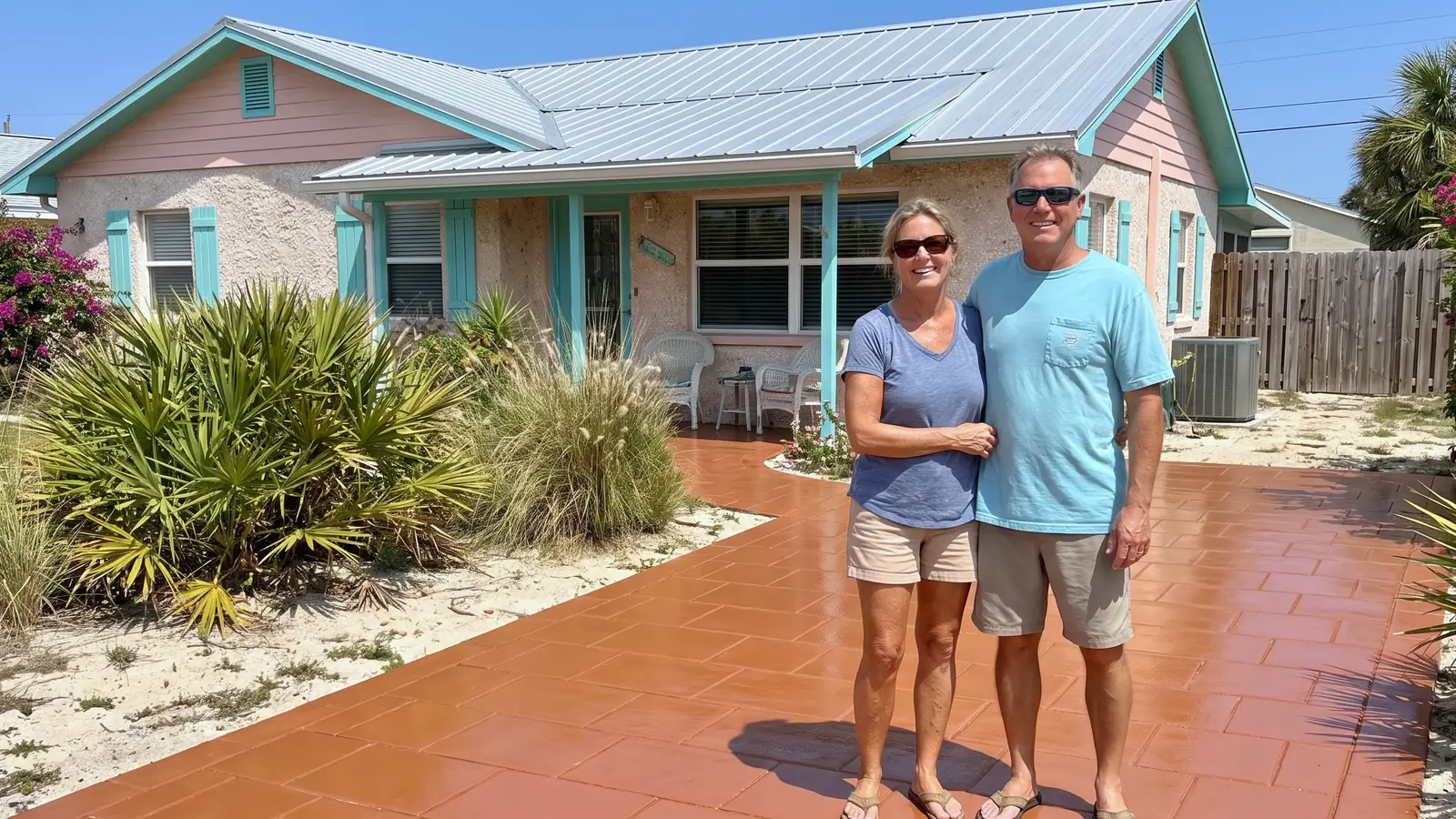
Paver sealing for Venice homes
Paver Sealing in Venice, FL
Venice pavers, from the island to the mainland, can look new again, so call (941) 226-8326 for a free estimate.
- Brings out deeper paver color
- Fresh joint sand helps lock pavers in place
- Gives weeds less room to grow
- Makes the surface easier to keep clean
- Free estimate, no obligation
Request a Free Estimate
Free, no obligation.
Fast, careful paver sealing in Venice
Paver sealing in Venice reaches both the island and the mainland side of the city. A local contractor cleans, sands and coats driveways, lanais and pool decks, and you get a free estimate with a reply within 1 business day, usually much sooner, when you call (941) 226-8326. Gate and garage details are easy to arrange.
Look at the low spots in your driveway. If the coat there has turned cloudy or white and started to flake, it has likely failed. Clean or strip it back, add sand, and a fresh coat leaves one even color. Or you can ask for a free estimate and describe what you see.
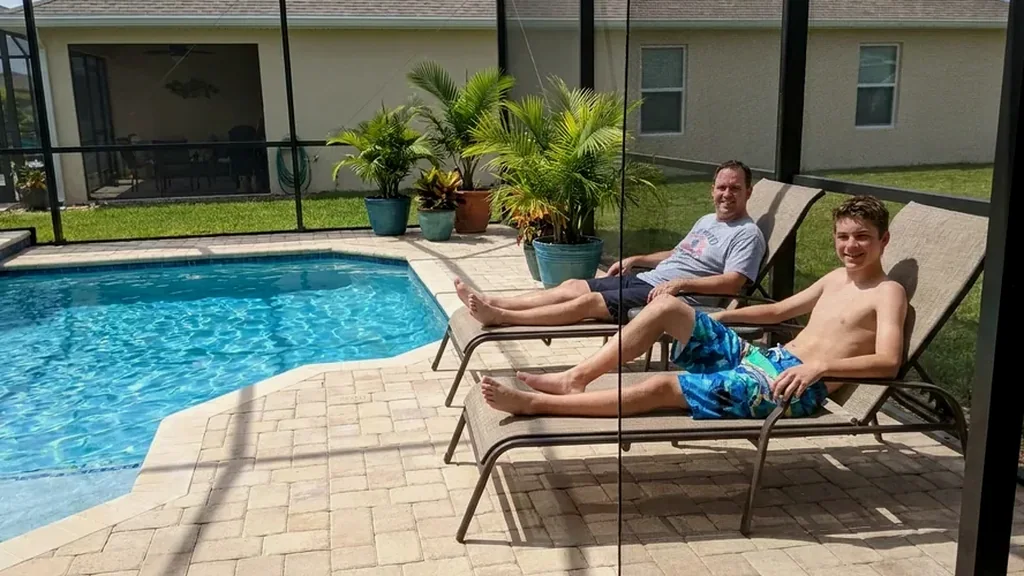
Why hire a local paver sealing contractor in Venice?
Venice has an island between two bodies of water and a mainland of shaded subdivisions, and a coat ages differently on each. A local contractor can tell which you have, so ask for a free estimate and ask.
A free look, a written price
The contractor measures your Venice pavers and gives you a price on paper. Say yes or no afterward. The visit costs nothing.
A figure to measure bids by
Companies across Southwest Florida publish $1 to $3 a square foot to clean, sand and seal. Check each Venice quote against it.
Island or mainland plan
One Venice company plans about two years between coats on the island and two to three inland. Ask what your block needs.
Finish is your choice
Matte or wet look, and a date that suits you. No obligation comes with the estimate. A small test patch can show the look first.
Get Your Free Estimate in Venice
Tell us about your pavers in Venice.
Free, no obligation
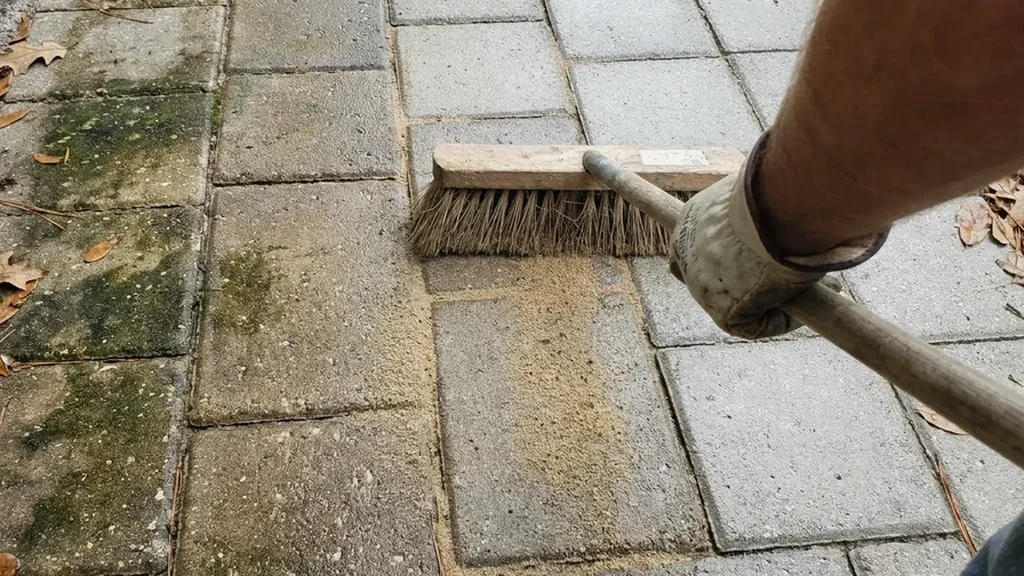
What paver problems show up most in Venice?
Salt and sun on the island
Venice Island sits between the Gulf and the Intracoastal, with water on both sides. A local company says salt reaches surfaces from two directions there, and that sealer wears faster than it does inland. It plans about two years between coats on island driveways and pool decks. Homes near the water may want an earlier check. A yearly look at the coat is a sensible habit for a home that backs onto the bay, since a thin spot is cheaper to fix than a peeled one. Older island homes often have brick-paver drives that have been sealed and failed at least once, one Venice company notes, so the history matters before a product is picked. Venice sits at only 13 feet of elevation, so water and air from both sides are never far away.
Cloudy, flaking coats
Failed sealer turns cloudy or whitish, flakes at the edges and peels in thin sheets, the same company says, mostly in low spots where water sits. Owners often assume the pavers themselves have gone bad. Usually they have not. New sealer over a failed coat gives a worse result, so the old one may need stripping. Photos of the worst patch help the estimate, so the contractor can see what you mean without guessing. The same company says mid-2000s subdivisions such as Venice East and Pinebrook South are on a second or third cycle of coats.
Shade and damp inland
Venice receives about 51 inches of rain a year over roughly 107 days, with June and August the wettest. On the mainland the company says the fight is moisture and shade rather than salt. Pavers that stay damp grow algae and mildew first, and that film is washed off before a coat goes on. Shade is not bad for pavers, but it does mean the wash and the dry time both get more attention on these lots. Newer builds in Pelican Pointe and Grand Palm came with concrete pavers, it adds, and many have never been sealed at all.
Sand that drains away
Summer storms in Venice can wash joint sand out, and sandy Florida ground such as Myakka fine sand, the state soil, drains fast. Low joints invite weeds and let pavers move. Sand goes in after the wash, before the first coat touches the surface. Full joints also keep the surface even, which matters on a walk where people pull suitcases or push strollers. Lots beside the Legacy Trail tend to hold more shade and moisture, one company notes, so those joints deserve a look.
Rust from the sprinklers
Well water in Florida tends to carry iron, and irrigation with it can leave orange streaks, according to the University of Florida. A driveway next to a sprinkler zone can end up with rust fans. The stain is treated during the wash, because sealer would trap it. The wash is the right time to deal with it, so the stain does not come back through the new coat. Point out any rust you see when the contractor visits, and the plan can account for it.
Is paver sealing different on Venice Island than on the mainland?
It can be, because the island has water on both sides and the mainland has more shade and irrigation. A Venice company plans on about two years between coats on island driveways and pool decks and two to three on the mainland. Those figures are one company's planning numbers, not a rule. Mention which side of the water you live on when you ask for a free estimate.
On the mainland, that same company lists Pinebrook South, Venice East, Pelican Pointe, Grand Palm, Venetian Falls, Plantation, South Venice and Venice Gardens among the areas it works in. Homes in those areas were built in different years, so some have a first coat still to come and others have had several. An old coat limits what can go on next. Call (941) 226-8326 and name your neighborhood.
Inside the historic core, John Nolen planned the district in 1926 between Laguna Drive, Home Park Road, the Corso and The Esplanade, and it joined the National Register in 2009. The city can have rules for exterior work on listed properties, and that is not covered here. Ask the city before you plan work on a historic property, then ask for a free estimate once you know what applies.
Venice skews older. The 2020 census put the median age at 69.8, with 62.8 percent of residents aged 65 or older. For many owners that means a firm start time, a clear window for staying off the pavers and a quote in writing matter more than a quick turnaround. Call (941) 226-8326 to ask.
The city covers 17.78 square miles, 16.13 of them land. Ask who will be on site when you call (941) 226-8326.
What does paver sealing cost in Venice?
A Sarasota paver company puts sealing at about $1 to $3 per square foot, and Southwest Florida companies publish that same range to clean, sand and seal. In Venice the total follows the area, the old coat and the sand the joints need. A lanai and a pool deck join the driveway on the same measure. For your figure, ask for a free estimate.
The old coat is the biggest swing. One that peels may need stripping before anything new goes down, and that adds hours. Open access keeps costs down, while a tight courtyard raises them. Call (941) 226-8326 and the contractor can say what is likely at your Venice address.
| Paved area | Typical example | Clean, sand and seal |
|---|---|---|
| 300 sq ft | Small patio or walkway | $300 to $900 |
| 600 sq ft | Two car driveway | $600 to $1,800 |
| 1,000 sq ft | Large driveway or pool deck | $1,000 to $3,000 |
| 1,500 sq ft | Driveway plus pool deck | $1,500 to $4,500 |
Math based on the $1.00 to $3.00 per square foot that Southwest Florida paver companies publish. Your contractor sets the actual price after seeing the surface. Repairs, leveling and stripping failed sealer are usually extra.
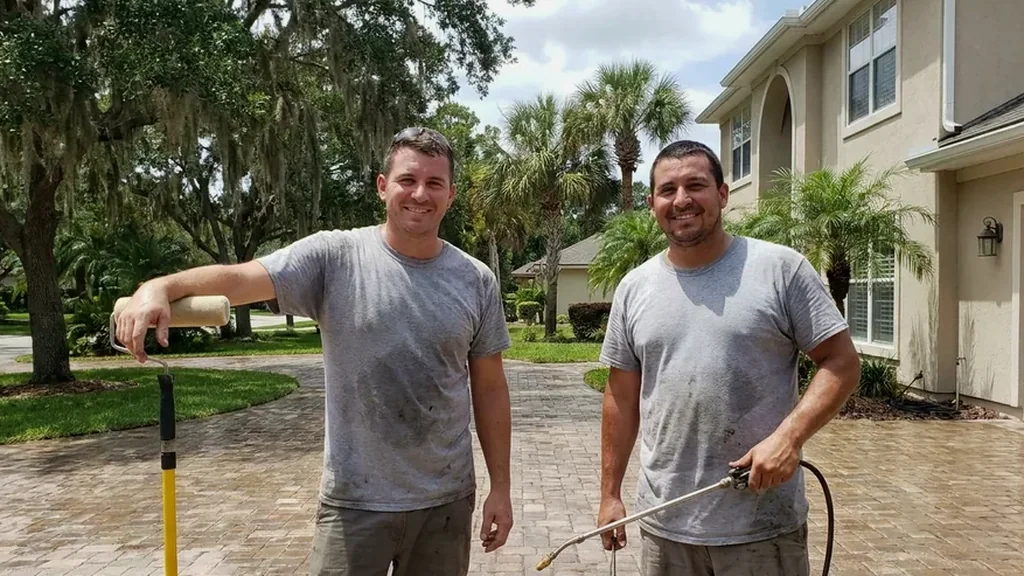
How does a paver sealing job work in Venice?
Read the surface
The contractor checks whether the pavers are sealed, how the coat is aging and where water collects. Sunken or lifted pavers are fixed first. A solvent-based coat rules out a water-based product over it, so the type is identified early. The visit is free, and it usually takes less time than people expect. Walk the low spots with the contractor, since they show how old the coat is.
Strip, or just wash
A cloudy or flaking coat may need to come off. A sound surface gets a wash that lifts algae, mildew, dirt and rust. Runoff stays off plants, screens and older masonry where the pavers meet it. Stripping is only needed when the old coat has failed, and the contractor tells you before adding it to the price. Planters, screens and landscape lights are covered or moved before the water starts.
Put the sand back
The wash lifts joint sand out, so fresh sand is swept in and the surface is cleared. On sandy Southwest Florida ground, full joints keep weeds down and the pavers snug. This is done before sealing, never after. The contractor sweeps in sand until it stops settling, then clears the extra so it does not stick to the new coat. Edges near the curb and the garage get the same care as the middle of the drive.
Hold for dry pavers
Sealer needs a dry surface. Venice sees rain on about 107 days a year, mostly in summer, and shaded mainland yards can stay damp. A careful contractor waits instead of sealing over moisture, which is what causes peeling. A humid morning or a late shower can move the start time, and the contractor says so by phone. The contractor checks again before starting, since a clear morning can still leave low spots wet. November is the driest month in Venice, so late fall gives the contractor the most room to find dry pavers.
Seal and cure
A Sarasota company puts down two coats. You pick a wet look or a natural finish. The contractor says when feet and cars can return, and leaves the product name with you for the next coat. A tiny test patch can show the look before the whole surface is done. Stay off the edges until the contractor says the coat has set.
Complete paver services in Venice
A Venice job runs in order: read, strip or wash, sand, dry, seal. That order keeps a coat from clouding or peeling later. Each stage sets up the next one. For how long each stage takes at your home, call (941) 226-8326.
Island drives take salt air and sun, mainland drives take shade and sprinkler spray, and pool decks take water and traffic. All are measured as one job, and each gets its own treatment. A covered lanai wears differently from an open drive. Say which of these you have when you ask for a free estimate.
The old coat comes first in choosing a sealer, since an old solvent-based coat rules out a water-based product on top. Then comes the look, and scuffs show up sooner on a wet look than on matte. A Sarasota company applies two coats. Call (941) 226-8326 to talk through the finish for your Venice home.
Venice rain peaks in June and August, and November is the driest month. Dry months give more room, while summer jobs can shift on a stormy day. Island homes may sit at the short end of a two-to-five-year span. To plan yours, ask for a free estimate.
Questions to ask before you hire
- Can you take care of rust and fertilizer stains from my sprinklers?
- How do you protect my plants, pool screen and landscape lights from overspray?
- Will the same crew that washes my pavers also seal them?
- Can you match a gloss, satin or natural finish to what I have now?
- How many days until I can drive on the driveway and put the furniture back?
- What happens if rain comes soon after the job is finished?
- Which sealer do you plan to use on my pavers, and why that one?
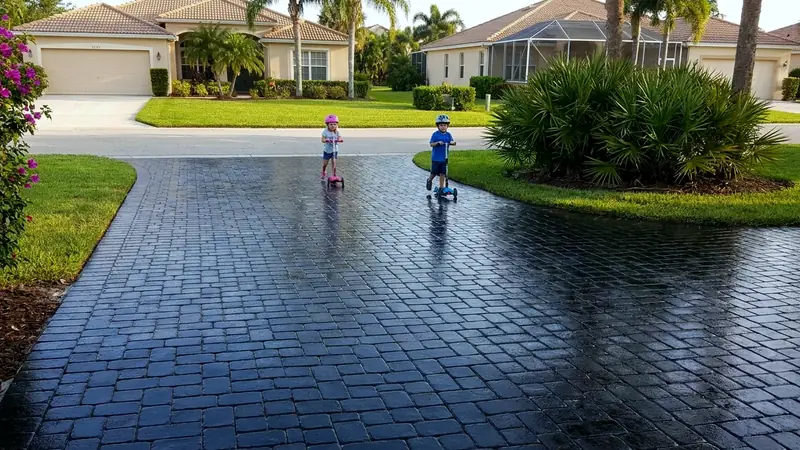
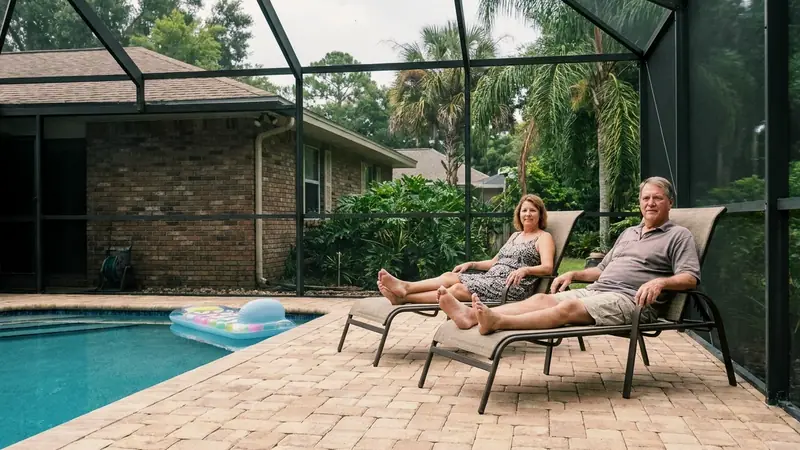
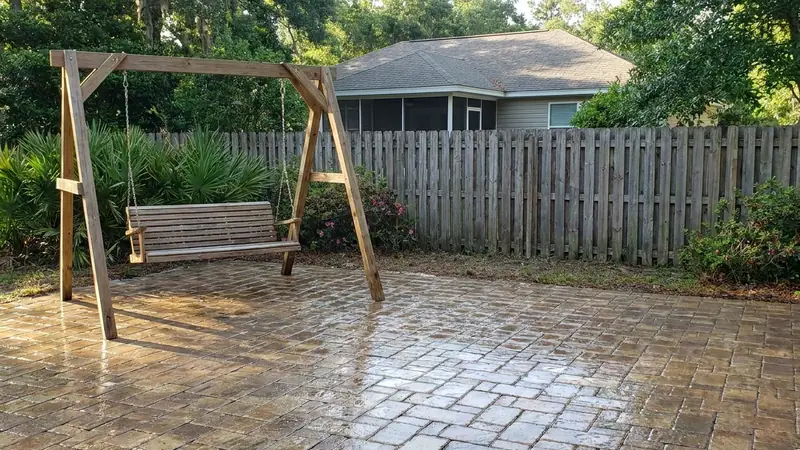
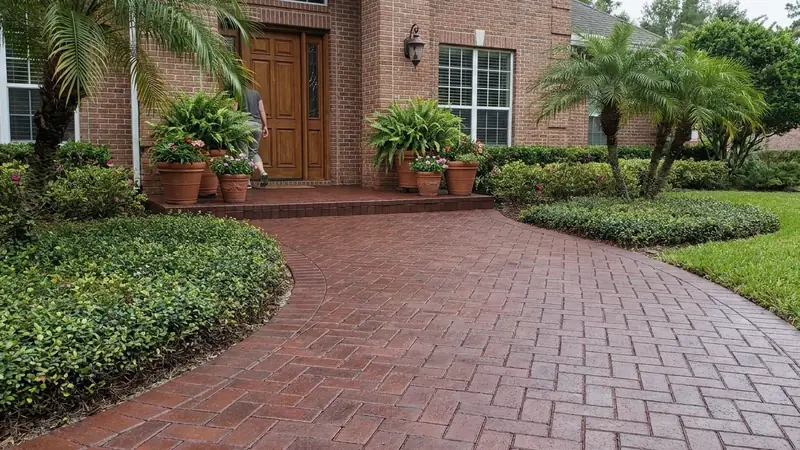
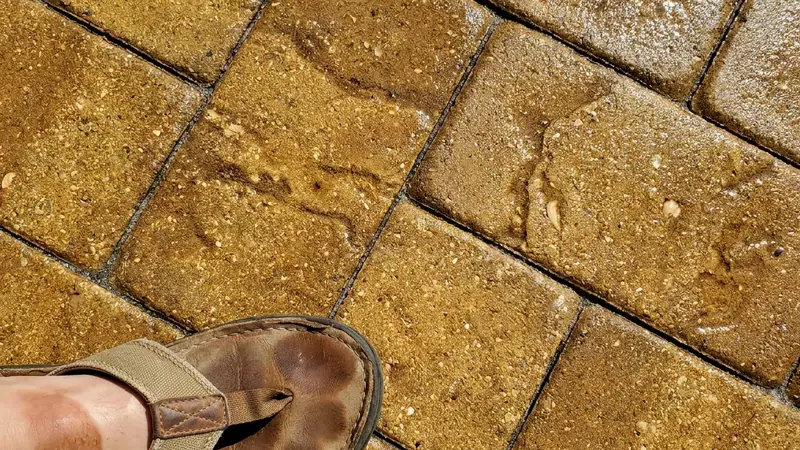
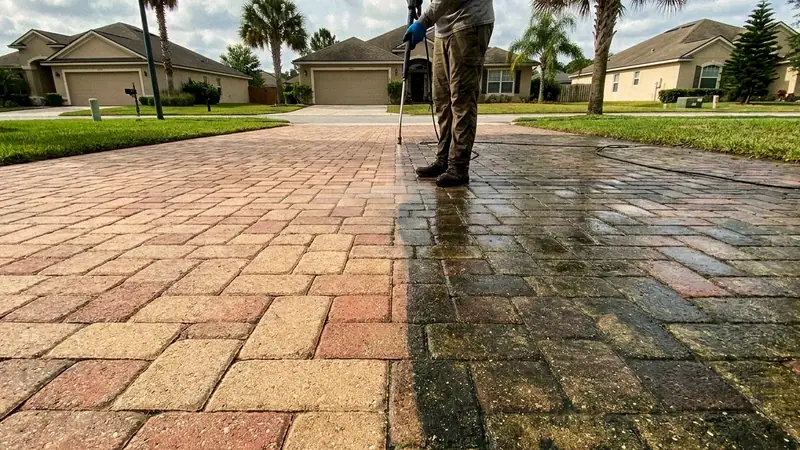
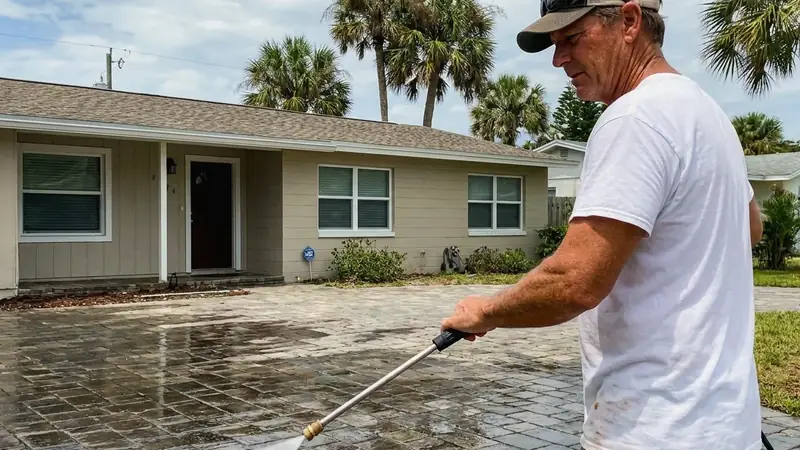
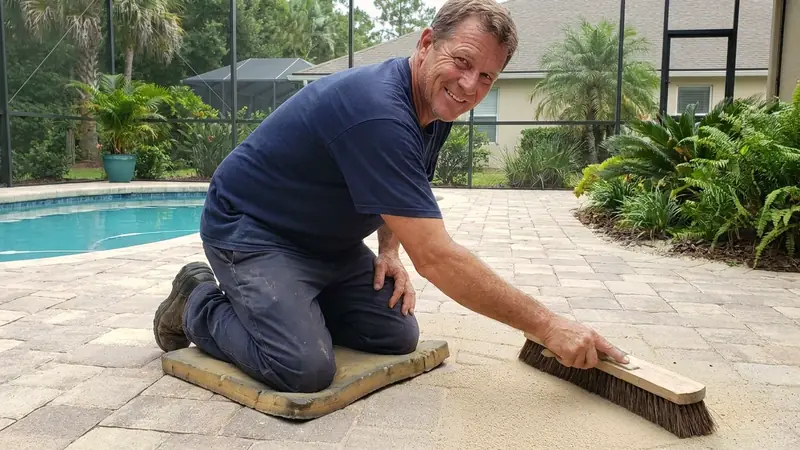
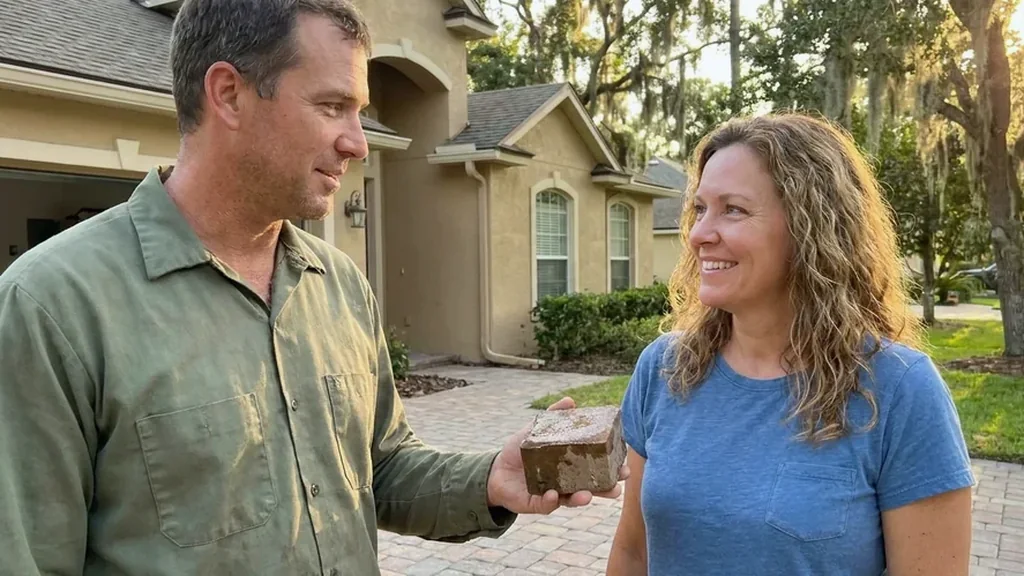
What do sealed pavers look like around Venice?
Why local matters in Venice
A contractor who knows Venice asks if you are on the island or the mainland. That one answer says a lot about salt, shade and how often a coat is needed. Someone new to the city may never ask. For a local contractor, call (941) 226-8326.
Older Venice homes call for more care too. Nolen's 1926 plan produced a walkable town, and the historic district holds Hotel Venice, Triangle Inn and Blalock House on the National Register. A local contractor knows to ask about rules on historic properties and to shield old masonry from rinse water. If your home is near the Corso or Home Park Road, ask for a free estimate.
Weather and water shape the schedule too. Summer storms come up fast, and a driveway near the Intracoastal can hold dampness longer than one inland. A local contractor builds the day around that. You can ask for a free estimate and ask how the day would be planned on your street.
What is the story behind the planned city of Venice?
Venice began as a fishing spot called Horse and Chaise in the 1870s, and Frank Higel suggested the name Venice in 1888. In the 1920s Fred Albee hired planner John Nolen, then sold the land to the Brotherhood of Locomotive Engineers, which kept Nolen on. The town was incorporated in 1926 and the city in 1927. If you live in the old planned core, ask for a free estimate.
Today you can walk or ride the Venetian Waterway Park trail along the Intracoastal, visit the Venice Jetty or see a show at Venice Theatre. The Legacy Trail starts at the old depot and runs 18.5 miles north to Sarasota. Venice calls itself the Shark Tooth Capital of the World and holds a Shark's Tooth Festival each year. Call (941) 226-8326 and tell the contractor your street.
Venice was planned on paper before it was built. In the 1920s land boom Fred H. Albee bought 112 acres from Bertha Palmer, hired John Nolen to plan the city and sold the project to the Brotherhood of Locomotive Engineers, which kept Nolen as planner. ask for a free estimate.
The first infrastructure went in during 1925 and 1926, the town was incorporated on July 1, 1926 and the city on May 9, 1927. Nolen drew a walkable center influenced by the English Garden City movement, and its streets still frame many of the older homes whose pavers may be due a check. ask for a free estimate.
National Register listings in Venice include Hotel Venice, Blalock House, Venice Depot, Triangle Inn and the Venezia Park Historic District. John Nolen planned the historic district in 1926, and it joined the Register on September 23, 2009. Homes near those blocks may have pavers with several coats behind them. Show the contractor your oldest section when you ask for a free estimate.
Frequently Asked Questions
How much does it cost to have pavers cleaned and sealed in Venice?
Plan on $1 to $3 per square foot to clean, sand and seal, the range Southwest Florida companies publish. Your Venice total follows the area, the old coat and the joint sand. The quote should list the footage and the product. Ask for the product name and the area in square feet.
Does Venice, Florida water leave stains on pavers?
It can, where irrigation water carries iron. Well water that runs high in iron leaves orange streaks when it is used for irrigation, the University of Florida says. A contractor treats rust during the wash, before sealing. Fresh rust is easier to lift than old rust, so point it out at the estimate.
What is the most effective way to clean patio pavers in Venice?
A full professional wash before sealing is the usual route. It removes algae, mildew, dirt and rust, and then the joint sand is replaced. A contractor chooses the method for the surface and the old coat. The contractor picks the pressure and the cleaner to suit the surface, and the sand is replaced afterward.
Are property taxes affected by sealing pavers in Venice, Florida?
Assessments are set by the Sarasota County Property Appraiser, not by a contractor. A coat of sealer is upkeep of pavers you already have. If you plan bigger changes, ask the appraiser's office. A quick call to the city planning office can tell you which rules apply to your address.
How often do pavers in Venice need a new coat of sealer?
Two to five years is the span you will hear quoted between coats. A Venice company plans on about two years on the island and two to three on the mainland. Sun, salt and pool use pull you toward the short end. Island homes near the water are likely to be at the short end, while shaded mainland drives may be at the long end. Venice's record high is 100 degrees, set in June and July, and heat like that ages a coat over the years.
Why is my sealer cloudy or peeling in Venice?
A local company says failed sealer looks cloudy or whitish, flakes and peels in thin sheets, often in low spots where water sits. The cause is often a coat laid over a dirty or damp surface. The old coat usually has to be removed first. A coat laid over damp or dirty pavers is a common cause, which is why the drying step is not skipped.
Should I use gloss or a natural finish on a Venice pool deck?
A natural finish is the quieter choice, and a wet look shows scuffs sooner. Pool decks take wet feet, furniture and sunscreen every week. Gloss gives a deeper color if that is what you want. Natural-look sealer also tends to show fewer scuffs, which helps near the steps and the lounge area.
Does Venice have rules for work on historic properties?
It can, for homes in the historic district, which is on the National Register. The rules are not listed here, so ask the city before you plan exterior work. A sealing contractor can work around what you learn. Ask the contractor how long a surface stays closed, since that affects when the furniture can come back. Hotel Venice, Triangle Inn, Venice Depot and Blalock House are listed, and the district was added to the register on September 23, 2009.
Ready for a Free Estimate in Venice?
Call (941) 226-8326 and tell us about your pavers.
Free, no obligation