
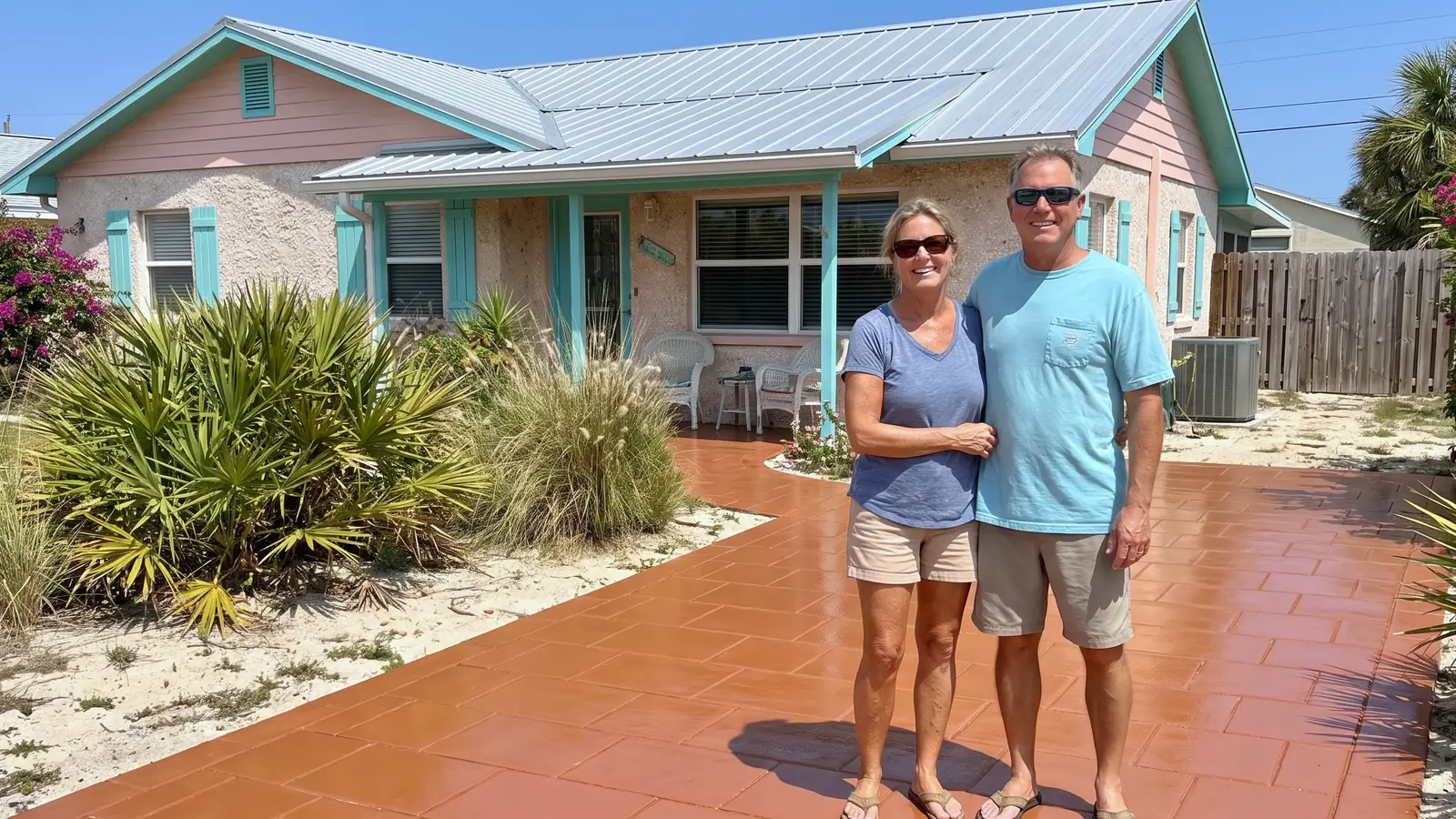
Paver sealing for Lakewood Ranch homes
Paver Sealing in Lakewood Ranch, FL
Lakewood Ranch driveways, lanais and pool decks can look new again, so call (941) 226-8326 for a free estimate.
- Brings out deeper paver color
- Fresh joint sand helps lock pavers in place
- Gives weeds less room to grow
- Makes the surface easier to keep clean
- Free estimate, no obligation
Request a Free Estimate
Free, no obligation.
Fast, careful paver sealing in Lakewood Ranch
Paver sealing in Lakewood Ranch is open to homeowners on both the Manatee County and Sarasota County sides of the community. The estimate is free, and a local contractor cleans, re-sands and seals driveways, lanais and pool decks. Ring (941) 226-8326 and expect to hear back within 1 business day, usually much sooner. The contractor can work around your garage door, your pool screen and any sprinkler zones.
Maybe your driveway has gone gray at the edges, with green creeping along the joints and a rust-orange streak near the sprinkler heads. After a wash, fresh joint sand and a new coat, the color comes back even from the curb to the garage door. If writing is easier, you can ask for a free estimate and describe what you see. There is nothing to sign at the visit.
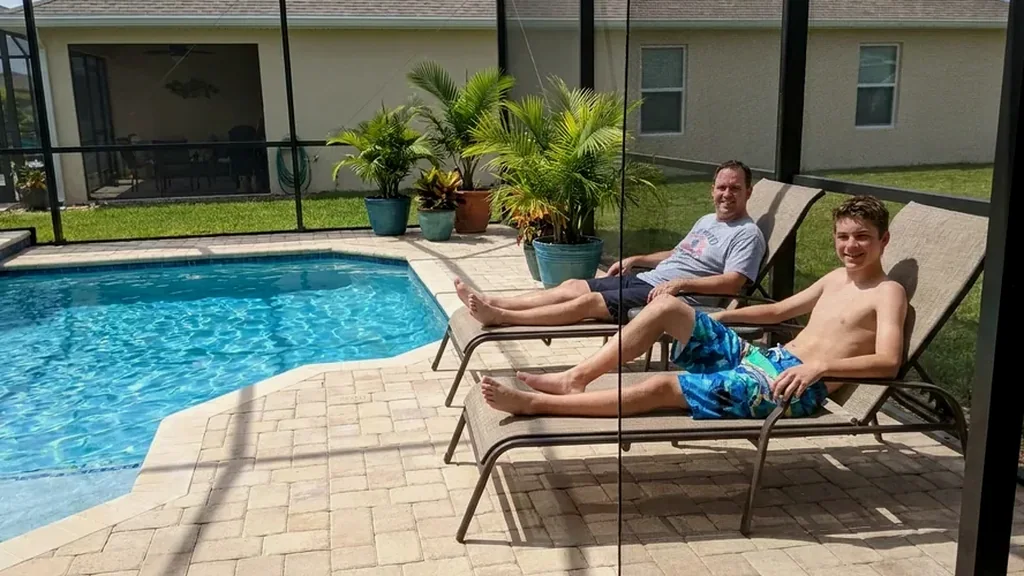
Why hire a local paver sealing contractor in Lakewood Ranch?
Lakewood Ranch is a community of villages built in stages, so the pavers on one street can be decades newer than the pavers a few miles away. A contractor who works these villages can read your surface quickly, so ask for a free estimate and ask.
Free look, price first
The contractor measures your Lakewood Ranch driveway, lanai and pool deck at no charge. You see a number before any work is agreed.
A published price range
Local companies list $1 to $3 per square foot to clean, sand and seal. Use that as your yardstick for any bid.
Gloss or natural look
A wet look deepens color but shows scuffs sooner. Matte keeps a quieter finish beside stucco and tile roofs.
You make the call
You choose the date, the finish and whether to go ahead. A Lakewood Ranch estimate carries no obligation.
Get Your Free Estimate in Lakewood Ranch
Tell us about your pavers in Lakewood Ranch.
Free, no obligation
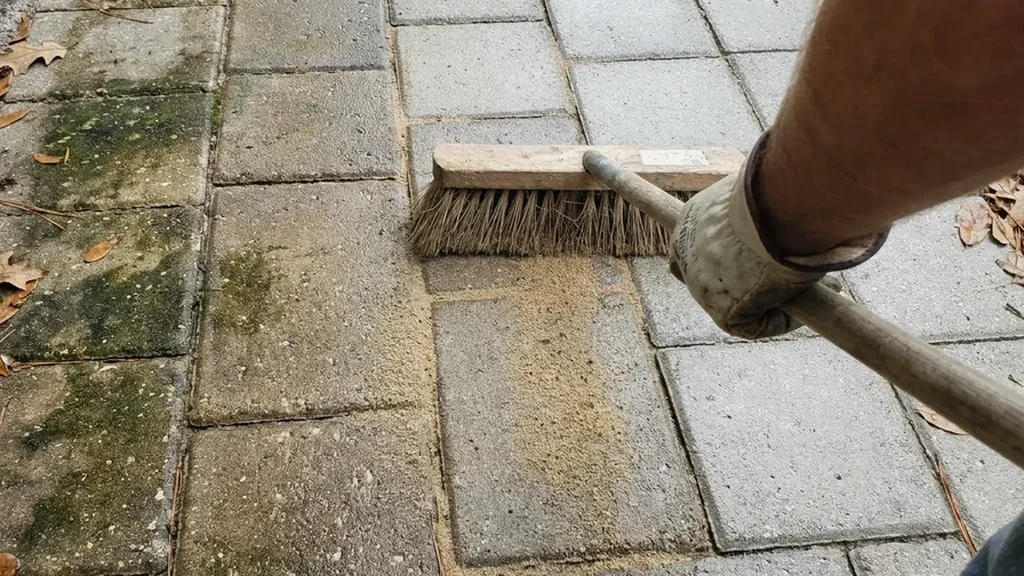
What paver problems show up most in Lakewood Ranch?
Rust-orange streaks from sprinklers
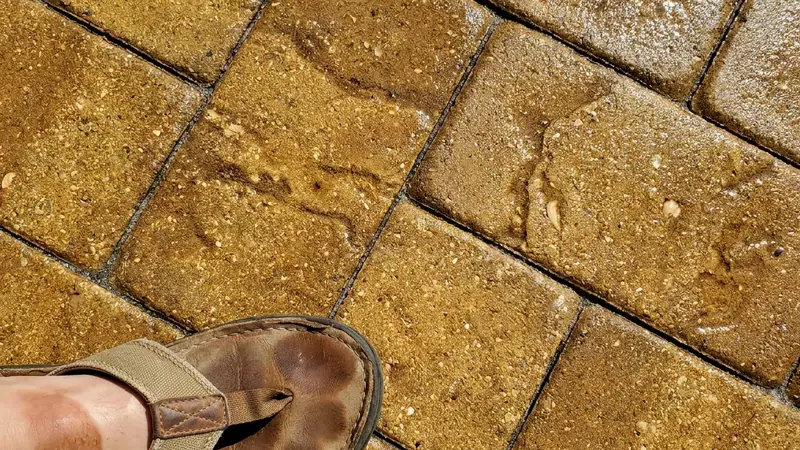
The University of Florida says most Florida well water is high in iron, and that orange streaks often show up where it is used for irrigation. If your Lakewood Ranch yard is watered that way, the spray can mark pavers near the beds. Rust has to be treated during the wash, because sealer would lock the stain in. Treating it early means the orange stain is gone before it can set in a coat of sealer. The wash is the time to deal with it, not afterward.
Joint sand that drains away
Florida's state soil, Myakka fine sand, drains water quickly through its sandy top layer. Sandy ground and heavy summer rain tend to pull sand out of paver joints. Open joints let weeds start and let the pavers shift, so new sand goes in before the coat. Full joints also make the surface feel firmer underfoot, which matters on a long driveway. Think of it as a tight lock between each paver.
Green film in damp, shaded corners
Parrish, in the same county, gets about 54 inches of rain a year, mostly in summer. Spots that stay damp, such as a north-facing walkway or the strip beside a pool cage, grow algae first. A local paver company lists algae, moss and old muck among the things a wash removes before sealing. The contractor can point out these spots during the free estimate, so you see them before you decide. That is why the joints get checked on every job. The Braden River, 21 miles long and tidal for its last 6 miles, runs through the southern part of Lakewood Ranch, so lots near it may stay damp.
A mix of coats from different years
Summerfield, the first neighborhood, was finished in 1995, and villages have opened in stages since. Some driveways have been sealed two or three times and others never. A water-based coat will not take over a solvent-based one, so someone has to find out what is on yours. A quick look at the surface usually shows whether it has a clear coat, a cloudy coat or none at all. A quick look at the surface tells the contractor which case yours is.
Scuffs on pool decks and lanais
Gloss sealer gives a wet look and shows scuffs sooner than a natural finish. Lanais and pool decks see chairs, bare feet and sunscreen every week. Pick the finish with how the space is used in mind, not only how it looks on day one. A matte or natural finish is also easier on the eyes in the strong afternoon sun that hits a lanai. That choice is easy to make before the work, and hard to change after.
Do the Lakewood Ranch villages seal differently from one another?
Often yes, because the villages were built in different years by different builders. The community's own site lists Azario Esplanade, Calusa Country Club, Cresswind, Del Webb Catalina, Monterey, Star Farms, Stillwater, The Isles and Windward, among others. An older village may have driveways with two or three coats on them, while a newer one may have a first coat still to come. Tell the contractor your village when you ask for a free estimate.
Waterside is a good example of a newer area, with neighborhoods named Bungalow Walk, Shellstone and Wild Blue. Main Street and Waterside Place are two of the three town centers, and homes near them tend to have smaller courtyards and walkways. Small spaces take less sealer but more hand work. If that sounds like your lot, call (941) 226-8326 and say so.
Five community development districts keep up the roads, drainage and common areas inside the Stewardship District. Your own association may also have rules about driveway color or work hours, and those rules are not covered here. Check them before you book, then ask for a free estimate with the details. The contractor can plan around your village's schedule.
Lakewood Ranch has its own public layers. The Stewardship District, set up on June 14, 2005, covers 23,055 acres in Manatee and Sarasota counties. The Braden River, 21 miles long, drains an 83-square-mile watershed and runs through the southern part of the community. If your street backs onto a pond or the river, ask about the green film that wet ground can bring, and call (941) 226-8326.
What does paver sealing cost in Lakewood Ranch?
Published prices around Southwest Florida run $1 to $3 per square foot to clean, sand and seal. Where a Lakewood Ranch job lands inside that range depends on how much old sealer is on the surface, how much sand the joints need and how big the area is. Driveways, lanais and pool decks are usually measured together. To price your own, ask for a free estimate.
Access and layout move the number as well. An open driveway is quicker than a walled courtyard where gear is carried by hand. Extra rust treatment near sprinklers adds time too. Call (941) 226-8326 and the contractor can tell you which of these fit your lot before work begins.
| Paved area | Typical example | Clean, sand and seal |
|---|---|---|
| 300 sq ft | Small patio or walkway | $300 to $900 |
| 600 sq ft | Two car driveway | $600 to $1,800 |
| 1,000 sq ft | Large driveway or pool deck | $1,000 to $3,000 |
| 1,500 sq ft | Driveway plus pool deck | $1,500 to $4,500 |
Math based on the $1.00 to $3.00 per square foot that Southwest Florida paver companies publish. Your contractor sets the actual price after seeing the surface. Repairs, leveling and stripping failed sealer are usually extra.
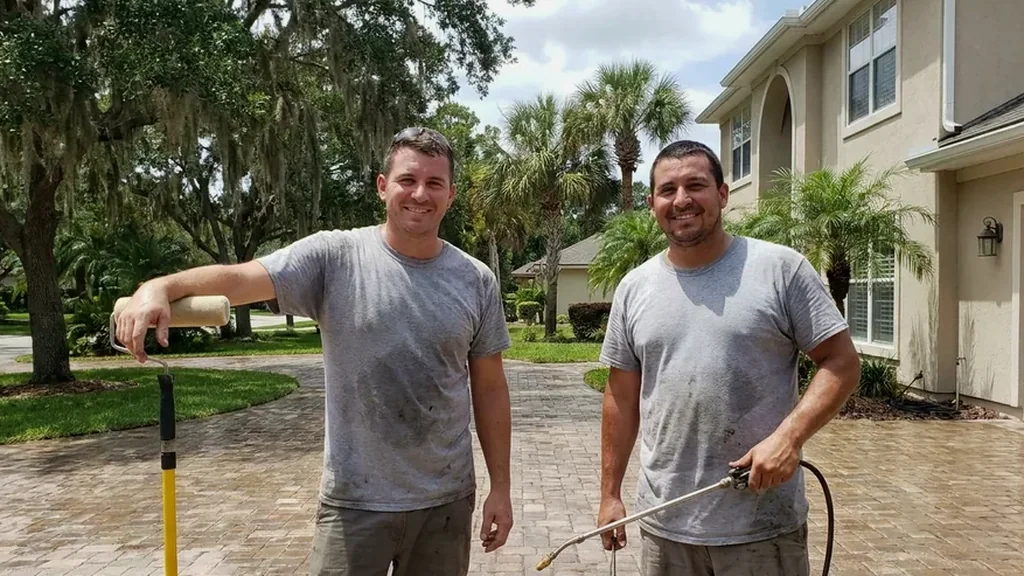
How does a paver sealing job work in Lakewood Ranch?
Walk the property and check for old sealer
The contractor looks over your driveway, lanai and pool deck, and notes where water pools and where shade stays. Sunken or lifted pavers get fixed first, because sealer keeps any dip it covers. If an earlier coat is down, the type matters, since a water-based product will not take over a solvent-based coat. That visit is free, and it is also a good time to point out any pavers that have sunk or lifted. The 2020 census counted more than 17,000 housing units here, so the range of coats on pavers is wide.
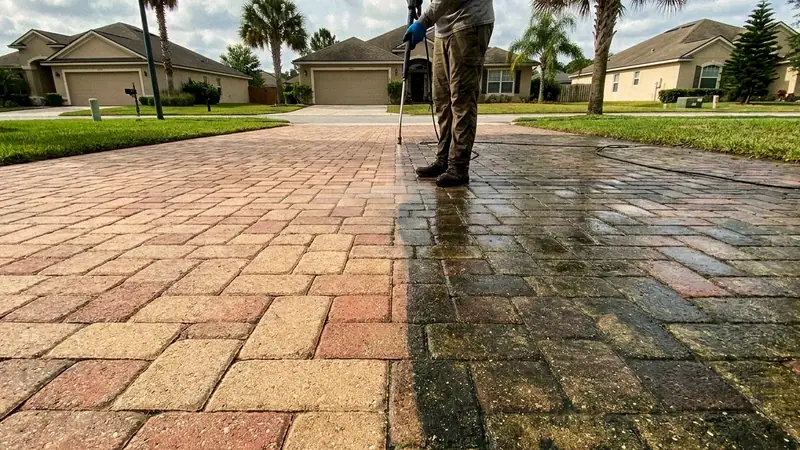
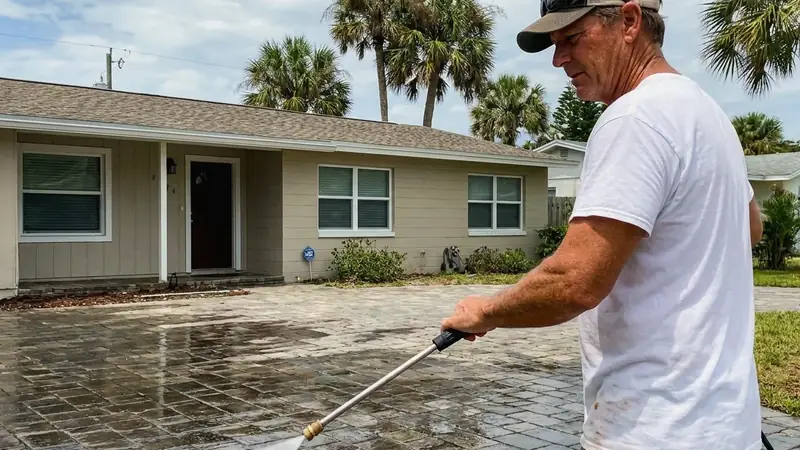
Wash away grime, algae and rust
Cleaning comes next. It clears green film, dirt and oil, and it is the time to treat sprinkler rust. Screens, plants and landscape lights are kept clear of the spray where the pavers meet them. Pool chemicals and splashes from the coping are kept in mind here, since they reach the edges of the deck.
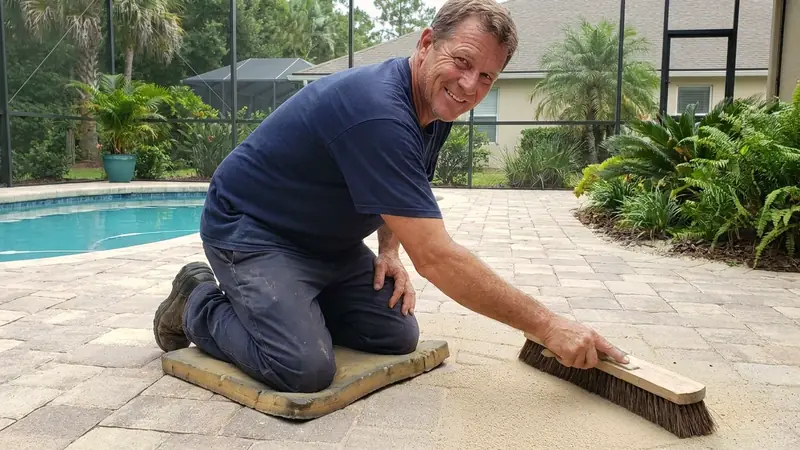
Put sand back in the joints
Washing pulls sand out of the joints, so the contractor fills them again and sweeps the surface clean. On sandy Florida ground, full joints keep weeds out and hold the pavers snug. Skipping this step shortens the life of the coat. Fresh sand is swept in until the joints are full, and the extra is brushed off so it does not stick to the new coat.
Wait for a dry surface
Sealer needs a dry surface. Summer storms are common in this part of Manatee County, so a careful contractor watches the sky and waits rather than sealing damp pavers. Shaded spots take longer to dry than sunny ones. On humid mornings the contractor may start later in the day, once the surface has had time to dry.
Apply the finish you chose
The sealer goes on in the finish you picked, often as two coats. Matte holds up to scuffing longer than a wet look does. The contractor tells you how long to stay off the surface before you walk or park on it. Once the coat has cured you can put the furniture back and park the cars as the contractor advises.
Complete paver services in Lakewood Ranch
A Lakewood Ranch job follows a set order: wash, re-sand, dry, then seal. The wash lifts algae and grime, and the sand goes back into the joints so the surface locks together. Sealer goes on last so nothing dirty gets trapped under it. To hear how long each step takes on your lot, call (941) 226-8326.
Driveways take tires and sprinkler spray, while lanais and pool decks take bare feet, furniture and sunscreen. Walkways under trees and along north walls stay damp and turn green first. Each surface wears in its own way, so the contractor prices them together but treats them one at a time. Tell the contractor which you have when you ask for a free estimate.
Sealer comes down to water-based or solvent-based, then to gloss or natural look. A Southwest Florida company describes gloss as a shiny wet look that deepens color and natural look as leaving the pavers as they are. Most pool decks suit the quieter finish. Call (941) 226-8326 to talk through which fits your Lakewood Ranch home.
Rain is heaviest from June through September in this part of the state, so summer dates can shift. Cooler, drier months give the contractor more room to schedule. You will hear two to five years quoted between coats. To ask what that means for your driveway, ask for a free estimate.
Questions to ask before you hire
- How long do the pavers need to dry before the first coat goes on?
- Does the quote include the wash, new joint sand and the sealer, or are some of those extra?
- Can you match a gloss, satin or natural finish to what I have now?
- Does your insurance cover damage to my home or my pavers while you work?
- How many days until I can drive on the driveway and put the furniture back?
- Which sealer do you plan to use on my pavers, and why that one?
- Will you send a written estimate that lists the square footage and the product?
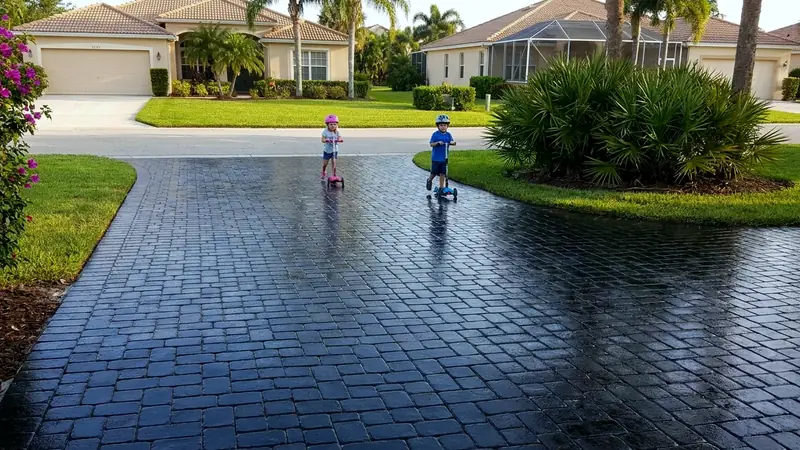
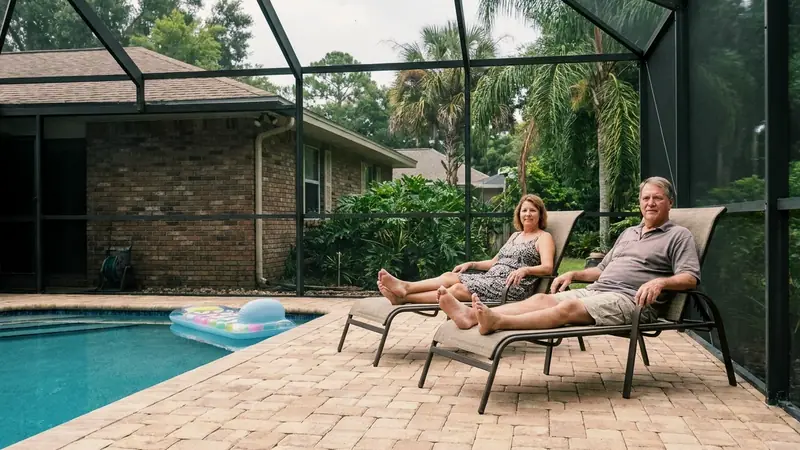
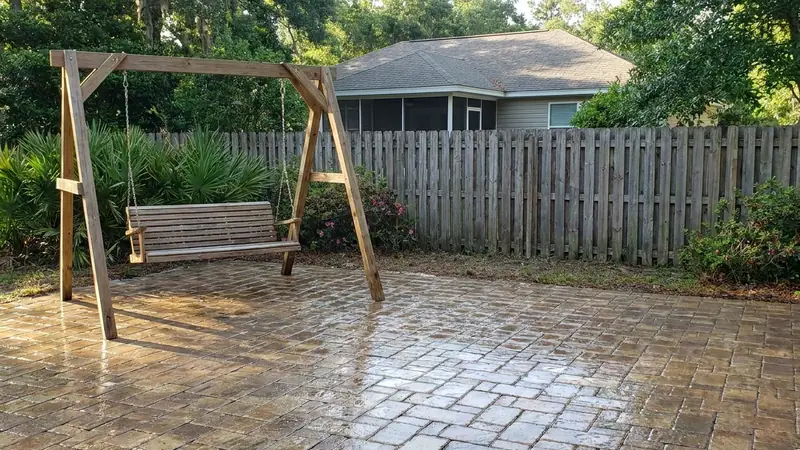
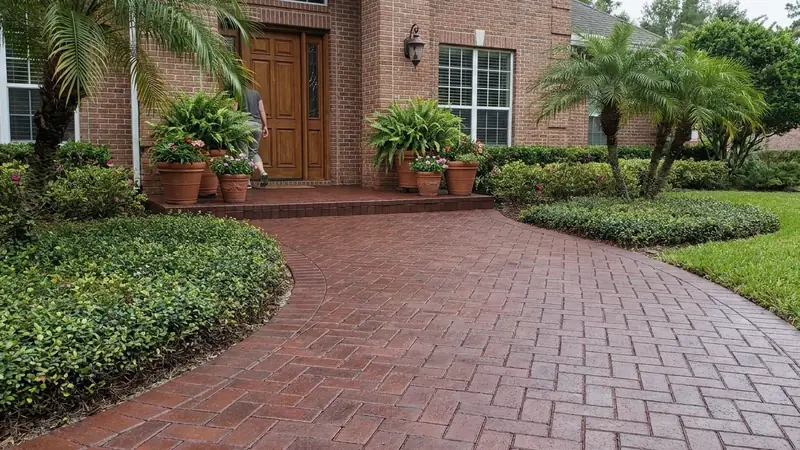
What do sealed pavers look like around Lakewood Ranch?
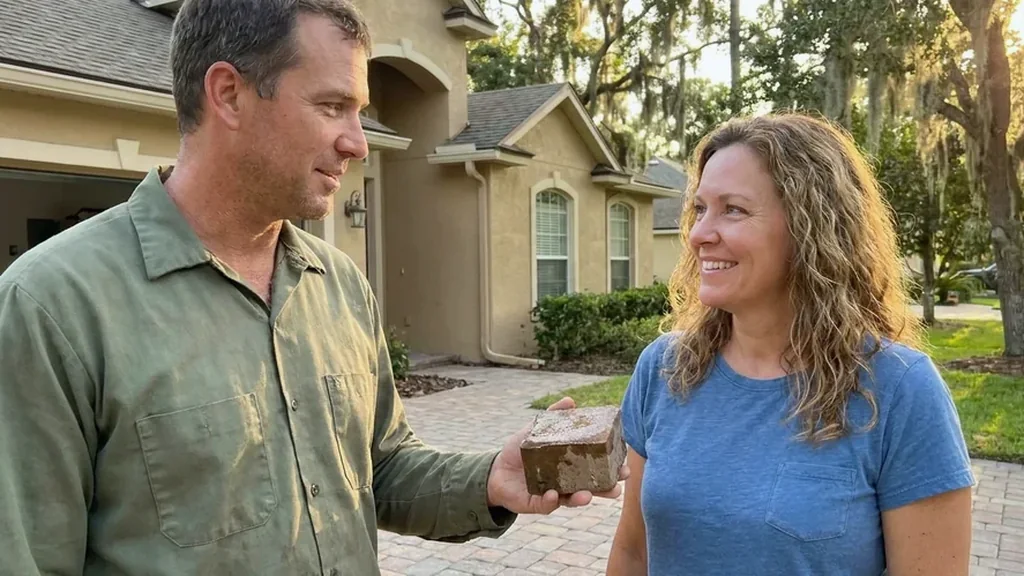
Why local matters in Lakewood Ranch
A contractor who works Lakewood Ranch will ask which village you live in and when the home was built. That tells them whether to expect old sealer, a first coat still to come, or a builder surface that has never been treated. A crew from another county might skip the question. For a local contractor, call (941) 226-8326.
Timing matters as well. Summer storms arrive fast, and a driveway that looks dry at nine may still be damp in a shaded corner at noon. The contractor builds the day around that. You can ask for a free estimate and ask when a crew could fit your street.
Local work also means knowing the shape of a village lot. Garages sit close to the street, lanais back onto ponds and preserves, and many homes have small paver courtyards by the front door. Each calls for a different way to move gear and a different way to protect plants and screens. If that sounds like your home, ask for a free estimate and mention which village you are in.
What is the story behind Lakewood Ranch?
It started as ranch and timber land. John Schroeder assembled the property in 1905, the Uihlein family of Milwaukee bought it in 1922, and the first village, Summerfield, was finished in 1995. Today the community runs from State Road 64 down to Fruitville Road and about 7 miles east of Interstate 75. If you live near the old ranch land and your pavers need attention, ask for a free estimate.
Inside those lines you will find the Braden River in the southern part, Main Street and Waterside Place as town centers, and more than 150 miles of trails. Lakewood Ranch High School and State College of Florida, Manatee-Sarasota are here too. The community's own site also counts 13 neighborhood plazas and three major town centers. Call (941) 226-8326 and name the village you live in.
Before the villages, this land supplied wood. In 1915 the Schroeder Mills and Timber Company acquired about 23,000 acres in Manatee County, and Lorraine Township was built near what is now State Road 70 and Lorraine Road to support logging. John Schroeder had assembled the Schroeder-Manatee Ranch in 1905, and the Uihlein family of Milwaukee bought it in 1922 for timber and cattle. To ask about yours, ask for a free estimate.
Summerfield, the first neighborhood, was finished in 1995. Pavers here are young by comparison, so the contractor can usually tell fast how many coats yours have had. Call (941) 226-8326 and name your village.
Frequently Asked Questions
What does paver sealing cost in Lakewood Ranch?
Budget $1 to $3 per square foot to clean, sand and seal, the range published around Southwest Florida. Your Lakewood Ranch price depends on old sealer, joint sand and total area. Have the square footage written into the quote and check it against that range. A larger driveway with a pool deck and a lanai will cost more in total even at the same rate per square foot.
How often do Florida pavers need sealing?
You will hear two to five years quoted between coats. One Sarasota company says sealed pavers often last three to five years. Sun, daily tires and pool chemicals push a Lakewood Ranch deck or drive toward the shorter end. A shaded drive under heavy tree cover is a good candidate for an earlier check than one in full sun.
Which sealer works best on pavers in Florida?
Start with what is on the pavers now, then the look you want. Water-based sealer will not go over solvent-based, so the old coat is checked first. After that you choose between a wet look and a natural finish. You can also ask the contractor to show you the product label before work begins.
How much does it cost to clean and seal pavers on a Lakewood Ranch pool deck?
The same $1 to $3 per square foot range applies, and a pool deck is measured by its total area. Extra rust or algae treatment can add time. A free estimate lists the area and the product. Ask whether rust treatment, sand and sealer are all in the one price.
Do I need HOA approval to seal pavers in Lakewood Ranch?
That is up to your village and your association. Lakewood Ranch has a Stewardship District and community development districts for common areas, but rules about the pavers at your home come from your association. Read your documents or ask the manager before you book. If your village has a management company, an email to them is usually the quickest way to get an answer. The five community development districts handle roads and common areas, not the pavers at your door.
What does the average paver sealing job cost in Florida?
A Sarasota company lists about $1 to $3 per square foot. The final number moves with labor, materials and the type of sealer. Two quotes for the same square footage are the easiest way to compare. Your own square footage matters more than any average, so a measured estimate is the reliable number.
Will sealing remove rust stains from my Lakewood Ranch driveway?
No, the stain has to be treated before the sealer goes on. Orange streaks often come from iron in irrigation water, according to the University of Florida. A contractor handles rust during the wash, since sealer would lock it in. The wash comes first, and if the stain is stubborn the contractor will tell you before the sealer goes on.
How long until I can drive on sealed pavers?
Walking is usually fine within a few hours, while cars wait about a day; the sealer and weather decide. Ask which cure time goes with the product on your driveway. A humid or shaded drive can take longer. Walking on the surface too soon can leave marks, so it is worth waiting the full time.
Nearby areas we serve
Ready for a Free Estimate in Lakewood Ranch?
Call (941) 226-8326 and tell us about your pavers.
Free, no obligation